Is blogging still a thing? Thriving in the AI era
Let’s address the elephant in the room immediately: Is blogging still a thing?
With the rise of Large Language Models (LLMs) and generative AI, the internet is flooded with content. You might be wondering if it’s worth investing hours into writing a post when a bot can generate a 1,000-word article in seconds, or when users can just ask ChatGPT for an answer instead of visiting your site.
The short answer is: Yes, it still matters., but the way we blog, the reason we blog, and who is reading our blogs has changed firmly.
I love blogging. It helps me clarify my thoughts and share knowledge. However, my approach has evolved. I’ve stopped fighting the AI wave and started surfing it, using it to amplify my voice rather than replace it. Here is the reality of blogging in 2026 and how you can adapt.
The reality check: where did the humans go?
If you have looked at your analytics lately, you might have noticed a trend: human traffic is dipping, but “visitor” numbers might be steady or even rising. If you dig deeper, you’ll realize those aren’t people. They are bots.
Specifically, they are AI crawlers.
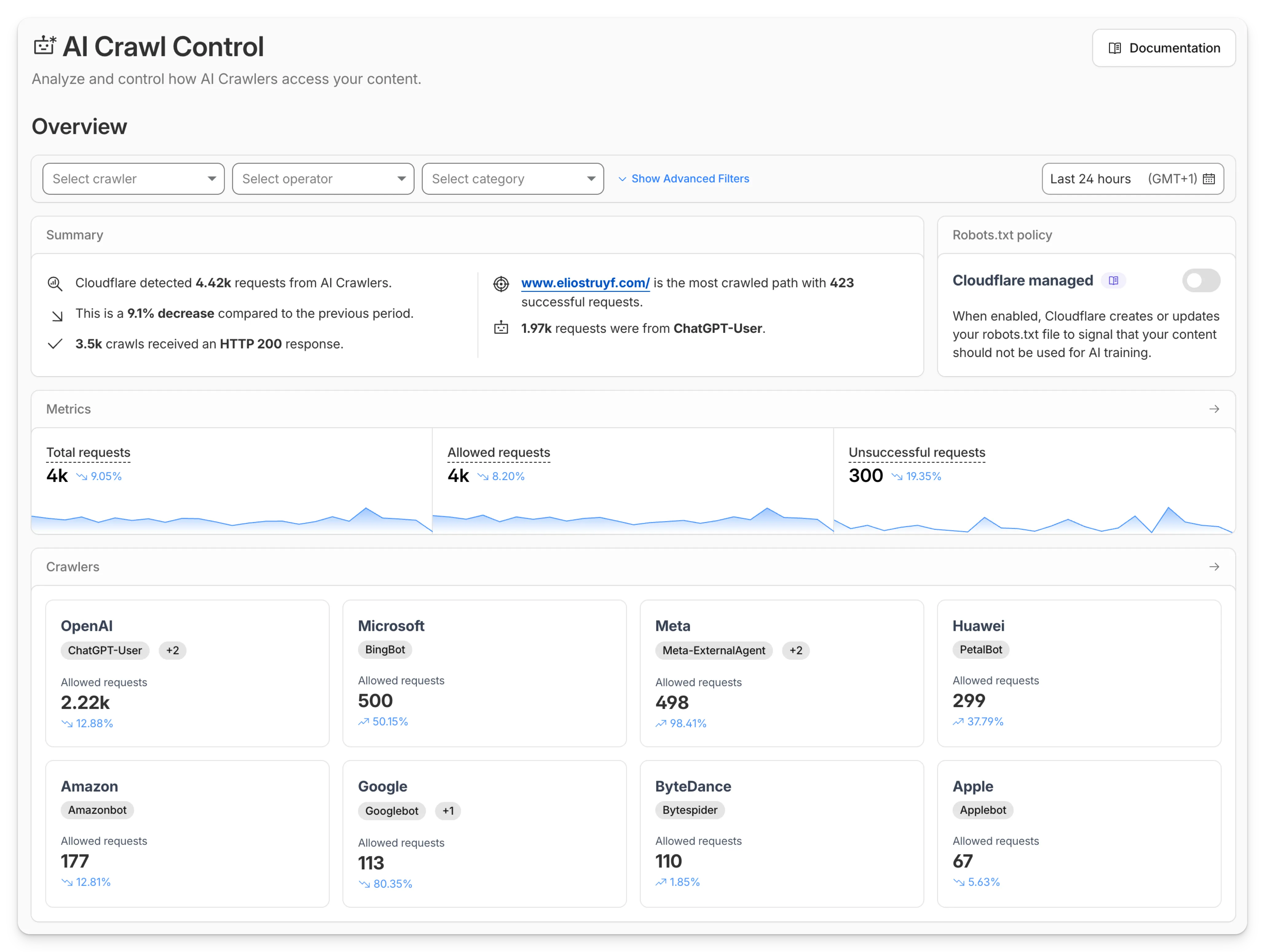
I recently checked my Cloudflare logs, and the activity is undeniable. My site is being crawled heavily by agents like ChatGPT-User (OpenAI), PetalBot (Huawei), and Meta-ExternalAgent.
Here is a snapshot of what that traffic looks like on my end (the last 24 hours):
- ChatGPT-User: 2.22k requests
- BingBot: 499 requests
- Meta-ExternalAgent: 498 requests
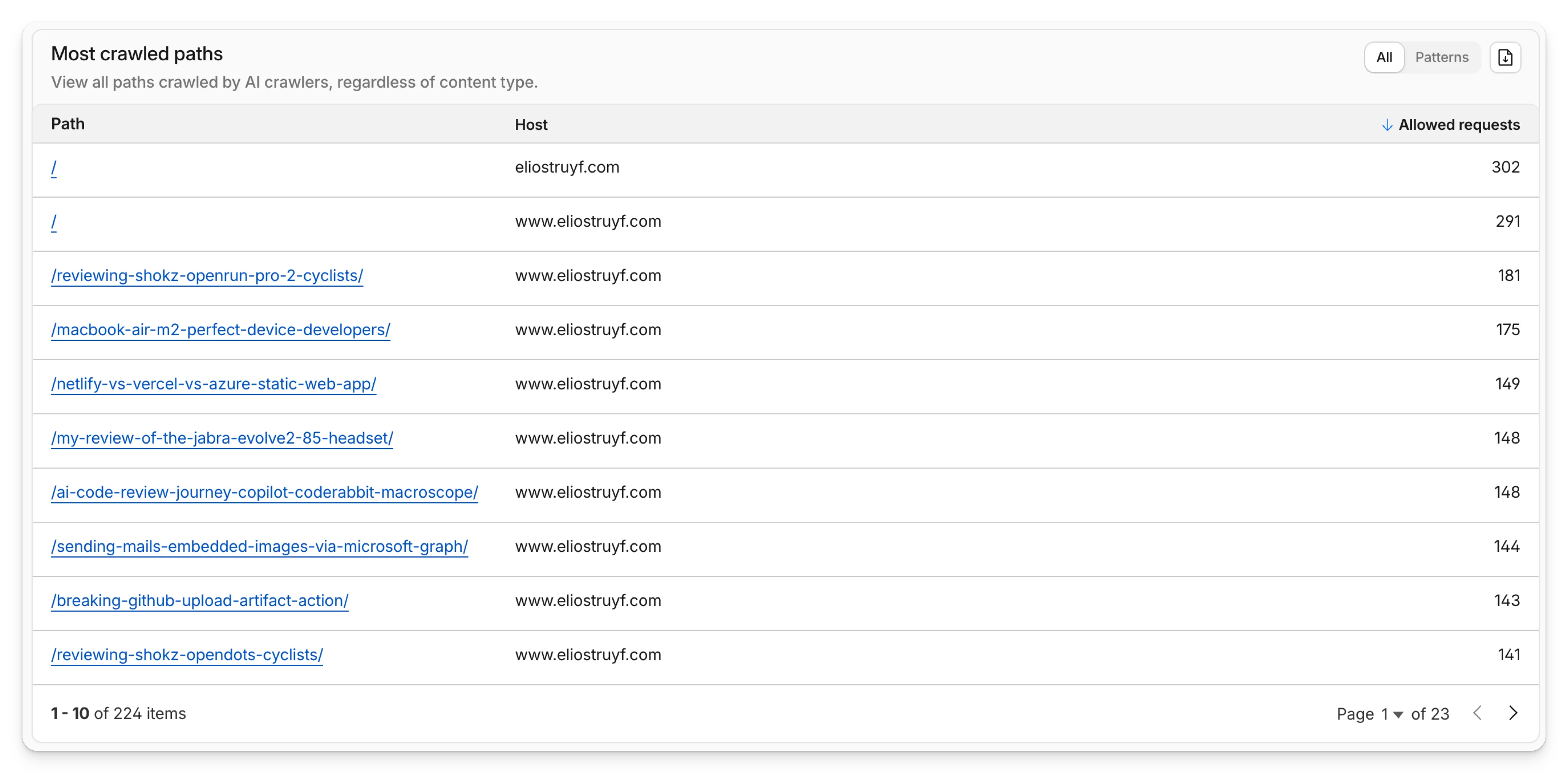
If I dig deeper, for the ChatGPT-User agent, I can see that the most requested pages are my review posts.
The shift in consumption
In the past, a user would search for a problem, click your link, read your tutorial, and maybe leave a comment. Today, an AI model scrapes your content, ingests the knowledge, and summarizes it for the user directly in a chat interface.
This drives users away from your site. It is a harsh reality.
We saw ta brutal example of this recently with Tailwind CSS. Auhenticity and community are vital, but for businesses relying on documentation traffic, AI can be devastating. Adam Wathan, the creator of Tailwind, noted in a GitHub discussion that traffic to their documentation dropped 40% from early 2023, despite the framework being more popular than ever. This loss of direct traffic contributed to significant layoffs because the docs were the primary funnel for their commercial products. Blogs and product documentation are not the same, but the principle remains: if AI can answer your users’ questions without them visiting your site, your direct relationship with your audience weakens.
The problem with “AI slop”
Because AI is eating up traffic, many creators have responded by using AI to churn out mass content to game the system. You have seen these posts. They are soulless.
- They overuse emojis 🚀✨
- They use dashes and bullet points for everything.
- They adopt weird fads, like writing entire articles in lowercase.
- The prompt was clearly just: “Hey AI, write a post about X.”
As a reader, when I encounter this, I stop reading immediately, certainly when text is written in all lowercase. My mind cannot focus on it. It breeds distrust. If you didn’t care enough to write it (or at least structure the thought), why should I care enough to read it?
Authenticity is your only moat. The specific reason my reviews are currently my most-read content is that they are deeply personal, subjective, and based on real-world testing, things AI cannot fully fake yet (or maybe it can).
A new workflow: interviewing myself
So, how do we balance efficiency with authenticity? I don’t write entirely manually anymore, but I also never let AI write from scratch.
My secret weapon is getting interviewed by AI (not so secret anymore).
I use a tool called Ghostwriter. It started as AI agents, evolved into an Electron app, and now includes a VS Code extension. Instead of staring at a blank page, I initiate an interview session. That way, I get to speak my thoughts out loud, and the AI captures them. It are my words, my voice, and my opinions, but structured by AI.
How it works:
The interview process
- I tell the AI the topic I want to cover (e.g., “Is blogging still a valid career?”).
- The AI acts as a journalist. It asks me 10 to 50 specific questions depending on the depth required.
- I answer these questions.
- Once the interview is complete, a transcript is available for the writer agent to process.
The writing process
- Once the interview is complete, I assign the transcript to the writer agent.
- It compiles my answers into a structured blog post.
- From the draft, I can ask to do further refinements, like adding an introduction, conclusion, or formatting code blocks.
To block or not to block?
Given that bots are scraping our content and lowering our direct traffic, should we block them?
It depends on your goal.
Scenario A: the passion blogger
If blogging is a hobby, a personal brand play, or a way to learn (like it is for me), let the bots scrape.
I am not going to block AI bots. I believe my content provides value, and if that value reaches a user via ChatGPT or via my website, I am generally okay with that. My goal is to share knowledge. I’ve been blogging since 2010 and I know that blogging is not going to generate a source of income for me directly. It is a way to build my personal brand, share knowledge, and connect with like-minded people.
Scenario B: the business
If your blog is your product, like the Tailwind documentation, you need to be strategic. If AI is answering your customers’ questions without them ever seeing your product pitch, your business model is bleeding.
In this case, you are not being hostile to progress by blocking bots in your robots.txt; you are protecting the direct relationship with your audience that keeps your lights on.
The verdict
Blogging is not dead, but the era of “content farming” is over.
If you want to blog in 2026:
- Make it YOURS. Authenticity is the only thing AI cannot replicate.
- Go Shorter. People (and bots) want concise info. You don’t always need a 2,000-word essay.
- Use AI as a tool, not a creator. Let it interview you. Let it format for you. Do not let it think for you.
- Diversify traffic. You could build an email list, show up on social, and encourage direct visits. Organic search is less reliable now.
- Build a community. Engaged readers matter more than raw traffic. Reply, ask questions, and create a place for people to gather.
- Build in public. Show your work, share decisions, and invite feedback. That kind of transparency is hard to fake with AI.
- Check your stats. Know who is reading—humans or machines—and decide if you need to protect your content.
- Blog to support, not replace, your brand. You won’t build a personal brand through blogging alone. Combine it with speaking, building products, or creating tools. My blog supports my conference talks and Demo Time work—it’s part of the ecosystem, not the whole thing.
I still learn best by writing. I write to clarify my thinking. If that’s why you blog, keep going. The bots can watch, but they can’t replace the human spark.
Resources
- Ghostwriter for VS Code - The extension I use for AI interviewing.
- Ghostwriter Agent Definitions - The specific “Interview” agent I use.
- How I get interviewed by AI - My detailed guide on this workflow.
- Tailwind CSS Discussion - Commentary from Adam Wathan on the impact of AI on documentation traffic.
- Cloudflare - How to block AI crawlers - Guide on blocking AI crawlers with Cloudflare.
Related articles
Ghostwriter for VS Code: your AI interviewer in your editor
I am releasing a new VS Code extension that brings the Ghostwriter interview experience directly into your editor, helping you write authentic content faster.
Can an AI be used as a ghostwriter for your articles?
Is an AI able to write the contents of your article? Well, that was a question I had and wanted to find out. In this article I tell you all about it.
The Future of Documentation: Ready for Change?
Discover the latest advancements in documentation technology and how tools like GitHub Copilot for Docs, Mendable, and OpenAI are changing the game.
Report issues or make changes on GitHub
Found a typo or issue in this article? Visit the GitHub repository to make changes or submit a bug report.
Comments



Let's build together
Manage content in VS Code
Present from VS Code
Engage with your audience throughout the event lifecycle